Claudia Vece - Your Neuro Emotional Trainer

Discover how the daily practice of Sadhana allows you to concentrate and focus your thoughts!

There is a profound introspective science that recognizes our subjective nature, distinguishing us from the inanimate objects surrounding us. In this view, thought itself is seen as a force capable of shaping and influencing the external world. This concept urges us to consider the mind as an integral part of the world, rather than separate from it.

When we reflect on this deep connection between mind and world, observer and observed, we understand that we are creative beings, capable of shaping reality with our thoughts, words, emotions, and actions. We are “effect creators”! The aim is therefore to enrich our psychic, emotional, and mental capacities to act consciously and create effects in the world that can foster a more harmonious and balanced reality, for ourselves and for others.

Language: the means to develop thought

In the modern era, instead of enriching our language to deepen our thinking, we are simplifying and flattening our communications, especially through social media. This phenomenon of impoverishing our minds has a significant impact on our ability to think critically and deeply and to look beyond with perspective.

Due to the impoverishment of language and thought, people tend to polarize in opinions and focus on differences rather than seeking harmony, unity, and common well-being. This phenomenon can be understood by comparing it to the metaphor of the divided hen: where only the back of the hen, which produces fruits, is desired, and the front, which consumes, is excluded; without understanding the importance and indivisibility of the whole. If we want to evolve as human beings and as a species, we must unite differences so that they can function better than divided poles.

The only way to understand and implement collective unity and well-being is to turn our attention inward, activating a process of awareness and growth that gradually allows us to modify our psycho-emotional structure, and then act in the world by creating value with every thought and action.

Introduction to the Practice of Sadhana

It is our task to engage in introspective science because if we focus exclusively on external affairs, we neglect internal, spiritual evolution and contact with the essence, the divine. Many still struggle to understand the connection between mind and matter, observer and observed, and that reality is not necessarily known, while this concept paves the way for the practice of meditation, which aims to bring attention inward through concentration and focus.

To immerse ourselves in the divine nature of the world of objects, we must meditate and learn to focus attention on a specific object. Meditation practice, or Dhyana, involves reflecting on psychic contents, exploring them as we immerse ourselves in a state of deep concentration. During meditation, when we focus on contents, it’s like downloading files from email, as the psychic contents of the object we focus on are progressively revealed to us. But many still lack this concentration due to a lack of practice, or Sadhana. Daily Sadhana practice teaches us to maintain this concentration not only during meditation but also in daily activities like walking, eating, and talking. Only when we acquire this capacity can we delve deeper, recognize inner contents, and make conscious and balanced decisions in our relationships and everyday life.

The purpose of every thought and every action should be to reduce conflict, polarisation and separation in our lives. Yet this can be difficult when people remain trapped in patterns driven by ego, opposition and the need to prevail. We therefore need to learn to master our thoughts, emotions and actions, and to communicate not in order to prove that we are right, but to understand one another, express ourselves clearly and cultivate gratitude.

Conflict can undermine relationships and communities, particularly when people come together not for the common good, but primarily to defend their own positions and interests. Simplified thinking and careless communication can create division and difficult situations in everyday life, often without us even realising it. People do not necessarily enter into conflict because they are malicious, but because they may lack awareness and the inner resources needed to move beyond polarisation and internal struggles, free themselves from conditioning and manipulation, and reconnect with a deeper sense of self in order to live more harmoniously with the world around them.

The daily practice of Sadhana guides us along a path of self-exploration and inner development, helping us cultivate discernment and become less reactive to external circumstances. It also encourages us to recognise the difference between a natural response to a genuine threat and fears that may be disproportionate to the situation we are facing. Through consistent practice, we learn to develop trust not only in external beliefs, but above all in our inner experience, cultivating a deeper and more authentic form of self-knowledge.

Sadhana, therefore, is not simply a collection of spiritual practices, but a journey towards self-understanding and the exploration of our deepest nature. It is an invitation to look within ourselves and reflect on the deeper meaning of our existence and our relationship with the world. This path of self-knowledge encourages us to question conditioned perceptions and approach life with greater awareness, presence and gratitude.

If you feel drawn to this path and to a deeper journey of introspection and self-exploration, contact us to discover how our individual and group programme, “The Quantasia Sadhana,” works.


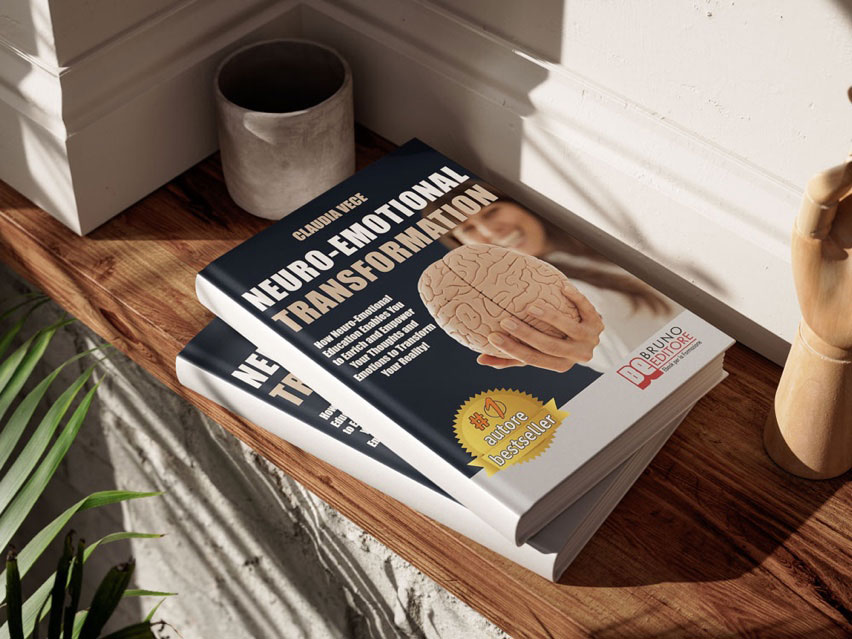
Amazon.it Best Seller

Neuro-Emotional Transformation

How Neuro-Emotional Education empowers your thoughts and emotions to transform your reality!

Neuro-Emotional Transformation

Are you ready to return to the centre and, from there, shape the future?

Sign up for our newsletter to receive monthly updates on transformation programmes based on neuro-emotional education.

Coaching is not therapy.

The Coach is a trainer, motivator, and facilitator in the client's evolutionary and decision-making process. They do not dig into the client's past to find the cause of a problem, nor make assumptions, but work by observing the facts.
The Coach is not a therapist, doctor, or psychologist. In case of symptoms or medical conditions, it is always advised to consult your physician or specialist. Any information provided here for educational or informative purposes is intended to help others make informed choices and does not constitute a diagnostic or medical tool, nor does it replace professional medical advice. No term on this site is used for diagnostic, therapeutic, or psychological purposes. Some words may be used by convention, but they do not imply medical or psychological expertise.
Coaching is not reimbursable by health insurance. Clients are informed of the differences between a Coach and a psychologist.

Cookie bar

Facciamo uso di cookies e di altre tecnologie di tracciamento per migliorare la vostra esperienza e per analizzare il traffico del nostro sito web.

Per maggiori informazioni vi invitiamo a consultare la nostra Politica sulla privacy.

Cliccando su "Accetta" acconsentite alla raccolta dei dati.

Potete modificare in ogni momento le impostazioni relative ai cookies e rifiutarli, tranne quelli funzionali strettamente necessari.


Funzionali
Preferenze
Statistiche
Marketing