If you want to feel emotionally well, you need to understand how to move out of a negative emotional state and create a state of emotional well-being.
Although emotions are an essential part of the human experience and serve an important purpose, when we experience difficult or negative emotions, it is easy to feel overwhelmed and vulnerable.
When we experience unpleasant feelings, our first instinct may be to escape from them. But where can we go? There is no truly safe place to hide when we feel overwhelmed or lost within ourselves, because emotions affect our entire experience. What we can develop, however, is the ability to regulate and transform our emotional states.
Our task is to acquire techniques and strategies that help restore balance to our inner emotional state. Re-establishing this balance means activating a process of emotional transformation, moving from a limiting emotional state towards one that supports greater well-being.
It is therefore essential to learn how to recognise and accept difficult emotions and develop practical tools to work with them when they arise, rather than suppressing, denying or ignoring them.
When we learn to observe our emotional experience with greater awareness, we can recognise difficult emotions and begin to understand the underlying factors that may be generating them. But awareness alone is not always enough. If we want to improve our emotional well-being, we also need to understand how to move out of a negative emotional state and create a healthier internal condition.
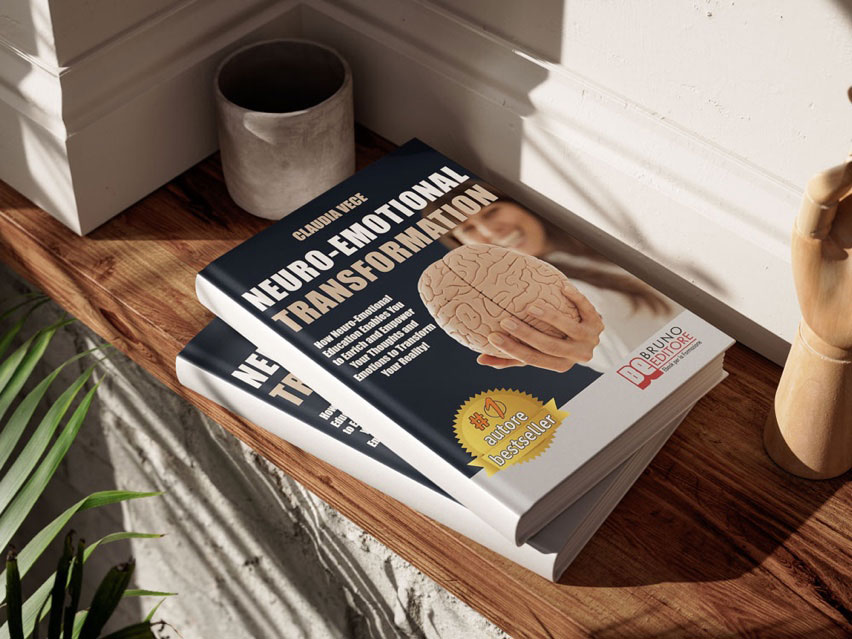
Through Neuro-Emotional Education, you can develop greater awareness and self-mastery through practical exercises designed to support personal growth, emotional awareness and greater inner balance.

Why Is It Important to Learn How to Transform Your Emotions?
Many people experience emotional distress without fully recognising it as such. Today, expressions such as “I have anxiety”, “I’m stressed”, “I feel frustrated”, “I’m overwhelmed” or “I feel lost” have become increasingly common. Yet this should not mean accepting chronic emotional discomfort as inevitable.
Personal development means integrating routines, practices and rituals into everyday life that, over time, help us develop greater self-awareness and move towards growth and greater emotional well-being.
Through Neuro-Emotional Coaching, we can learn to train our nervous system towards a different internal baseline — one characterised by greater calm, inner harmony, emotional balance, enthusiasm and a renewed capacity to experience life with presence.
As the name suggests, Neuro-Emotional Education focuses on educating and training our emotional and nervous-system responses, helping us move from limiting states towards more resourceful ones: from sadness towards joy, from insecurity towards confidence, from fear towards greater inner certainty, and from helplessness towards determination.
Through a Neuro-Emotional Coaching programme, we can learn to access and cultivate the wide range of emotional states that enrich our experience of life.
What Are “Trapped Emotions” and How Can You Recognise Them?
If difficult emotional states persist and negatively affect your everyday life, you may feel as though certain emotions remain unresolved or “trapped”.
Their impact may emerge through self-sabotaging patterns associated with emotional distress, such as limiting beliefs, behaviours that conflict with your intentions, disproportionate emotional reactions, insomnia, agitation or chronic dissatisfaction.
The expression “trapped emotions” is often used to describe emotional responses connected to past experiences that still feel unresolved and continue to influence present perceptions, sensations and behaviours.
From this perspective, experiences that have not been fully processed may continue to activate patterns of tension, fear or emotional reactivity. Stressful or traumatic experiences, negative inner dialogue, loss and unhealthy relationships may all contribute to persistent emotional patterns.

Why Choose Neuro-Emotional Education to Train Your Capacity for Well-Being?
Neuro-Emotional Education can be approached as a form of self-coaching that can be learned through Neuro-Emotional Coaching programmes. Its purpose is to support greater balance, emotional awareness and the development of internal resources that can help you move towards your goals.
Short neuro-emotional exercises practised consistently over time can become part of a daily well-being routine, helping you develop greater awareness of emotional patterns, improve self-regulation and support your overall emotional well-being and quality of life.
It is important, however, to distinguish between coaching concepts and established scientific evidence. The idea of emotions being literally “trapped” in the body is not a broadly accepted scientific or medical model. It is more appropriately understood as a conceptual framework used by some practitioners to describe persistent emotional and physiological responses associated with past experiences.
Various authors and practitioners have explored approaches centred on self-regulation, self-awareness and mind-body practices, although their theories and methods differ in their level of scientific support.
If you find it difficult to manage persistent or overwhelming emotions, seeking appropriate professional support can help you better understand what you are experiencing and identify suitable strategies and resources.
Through a Neuro-Emotional Coaching programme, you can learn practical self-regulation and emotional-awareness techniques, either online or in person, as part of a structured personal-development journey.