2022 has begun, and you are probably gaining clarity on the goals you want to achieve in this new year. Many people start the year with good intentions and new objectives, yet just as many tend to procrastinate, finding themselves year after year still chasing the same dreams that now seem as unreachable as shooting stars.
You probably know the saying all too well: “Easier said than done.”
Who knows how many people last year, while enjoying a slice of panettone, promised themselves that after the holidays they would go on a diet and start exercising regularly and consistently. And yet here they are again, at the beginning of another year, holding another slice of panettone and complaining that another year has passed without any significant change in their habits.
Others say that they cannot face another year like the one that has just ended and promise themselves—just as they did the year before—that this time they will finally make concrete changes.
People promise themselves that they will change their lives, transform their habits and become better versions of themselves. But between having an idea and taking action, there is a mindset that needs to be developed—and this is often the part people underestimate the most.
In this article, I will share some coaching strategies for defining and pursuing your goals. These strategies can help you develop a more effective mindset and adopt a structured approach to creating greater results and value in your life.
What Is Mindset, What Does It Mean and Why Is It Important in Coaching?
The term mindset comes from cognitive psychology, which studies how people process information through their habitual mental patterns. An individual’s mindset influences how they perform everyday tasks, make decisions, approach situations and respond to challenges.
When I explain mindset to my clients, I use these words:
Mindset is how you set—or programme—your mind before experiencing something. It is how you organise your thoughts and visions, how you give emotional meaning to situations and people, and how you mentally anticipate the effects you want to generate through your actions and communication before the experience even takes place.
Mindset is the mental framework you establish for approaching an experience before you actually live it.
This explains why we talk about techniques and strategies to “develop your mindset,” “improve your mindset” or “strengthen your mindset.” Mindset is like a muscle that can be trained through strategic thinking and self-reflection.
Developing an agile and flexible mindset can help you navigate the world more effectively while respecting yourself and others.
The more a person develops their mindset, the better equipped they become to create rewarding life experiences. By applying effective thinking strategies, you can develop mental patterns that support better personal, relational and professional outcomes.
Mindset matters because it influences the quality of your thoughts, emotions and actions, as well as the way you approach situations and respond to life’s challenges.
Strategies for Developing the Right Mindset to Achieve a Goal
1. Define Your Goal
To define your goal, you need to know what you want and why you want to achieve it.
Remember that what you ultimately want to obtain is not simply an object, a person or an external result, but the emotional experience associated with achieving it.
Through your goals and visions, you want to experience feelings such as satisfaction, fulfilment and well-being. Ideally, that emotional destination becomes part of your new normal.
Ask yourself:
- Is my goal expressed positively? Am I focusing on what I want rather than on what I do not want or what I fear?
- Is my goal specific? Instead of saying “I want to feel better,” could I say, “I want to exercise every morning for at least 30 minutes a day to improve my well-being”?
- Is my goal concrete? Do I have a clear, objective and measurable vision of what I want?
- Does my goal have a timeframe? Is it short-term, medium-term or long-term?
- Is my goal achievable? Can I realistically pursue it using the resources available to me?
2. Define Your Action Plan—and Your Backup Plan
Define your Action Plan and then create a detailed Backup Action Plan.
Planning the actions and steps required to achieve a goal is fundamental. It is equally important to establish an alternative plan, particularly when dealing with major goals or decisions, such as entrepreneurial choices or important family decisions.
The brain works through processes and direction, much like a GPS. It needs clarity about where you want to go in order to organise choices and identify effective strategies.
Planning is important, but having a backup plan is strategic: when stress, urgency or unexpected circumstances arise, it gives you an alternative route and allows you to adapt without losing direction.
3. Is Your Goal Win-Win?
Is your goal in the best interests of everyone involved?
Make sure your action plan also considers the needs and well-being of other people.
It is important to pursue your own interests while respecting those involved. If achieving your goal harms other people or significantly compromises their well-being or success, reconsider the way you are pursuing it.
Look for solutions that create a sustainable win-win outcome. In the long term, this approach helps protect your reputation, your relationships and your success.
4. If You Have a Dream, Protect It Until It Is Strong Enough
Sometimes sharing an important goal too early can expose it to other people’s doubts, fears and perceptions, potentially weakening your motivation.
Be patient. Act with awareness and responsibility rather than seeking external validation.
Give your vision the time and space it needs to become stronger before exposing it to unnecessary judgement.
5. Visualise Your Goal and Connect with the Emotions Associated with It
Visualise your goal in its best possible form and connect with the emotions that this vision generates.
Imagine your “future self”—the version of you who has already achieved your vision.
What does that person think?
How do they feel?
How do they behave?
Close your eyes and visualise yourself having already achieved what you are working towards. Make the vision vivid and connect with the feelings of confidence, enthusiasm, satisfaction and fulfilment associated with it.
These are part of what I call neuro-emotional skills: the ability to prepare and train your internal state to support your goals.
Thoughts, emotions and repeated behaviours can influence the brain through neuroplasticity. Learning to approach today’s choices from a state of greater confidence, strength and clarity can therefore influence how you act towards your future goals.
Choices and actions driven by fear do not produce the same behaviours as choices made from a state of confidence and inner stability.
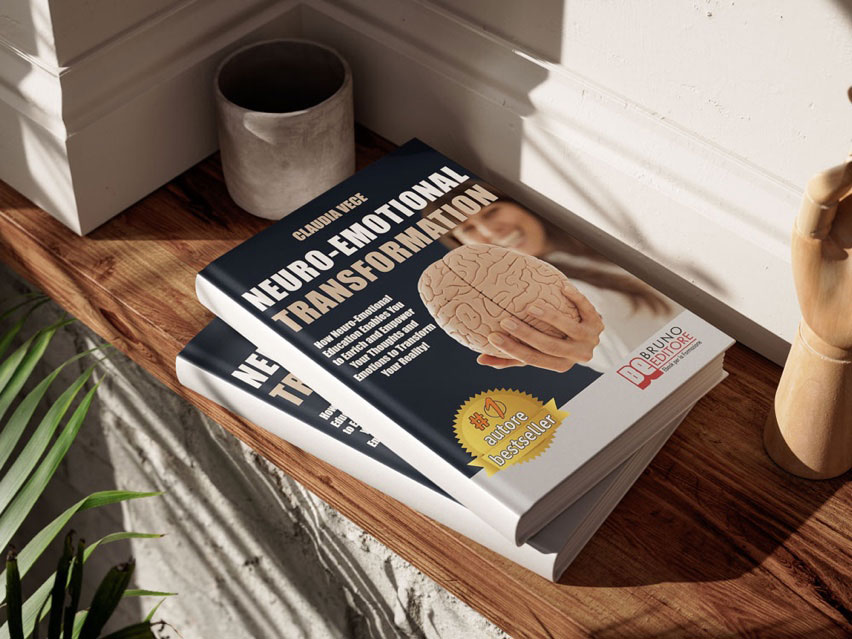
If you would like to explore these topics further, you can find them in my book Trasformazione Neuro Emozionale, published by Bruno Editore.
The Law of Attraction
We often hear about the Law of Attraction, but it is important to move beyond the simplistic idea that you can simply “visualise what you want and it will come to you.”
Visualisation alone is not enough.
From a coaching perspective, focusing consistently on a vision can help orient attention, motivation and behaviour towards the desired outcome. When your thoughts, emotional state and actions become more coherent with your objectives, you may become better able to recognise opportunities and act consistently towards them.
The important element is therefore not simply wishing for something, but developing the mental and emotional skills required to pursue it.
6. Celebrate When You Achieve a Result
Be grateful to yourself for the effort, consistency and energy you dedicate to your projects. Celebrate and acknowledge every milestone you reach.
One of the least productive attitudes is to achieve something and immediately focus exclusively on what you could have done better or what is still missing.
Start by acknowledging what you have accomplished. Then adjust your course and continue improving.
Many people struggle to appreciate their own progress because they constantly pursue perfection and, as a result, never feel truly satisfied.
Learning to recognise progress can reinforce motivation and encourage you to continue pursuing meaningful goals.
Create your own success ritual.
How will you reward yourself once you achieve your goal?
What rewards will you give yourself at intermediate milestones?
Who will you share your success with?
Creating positive associations with progress can help strengthen self-motivation.
7. Share Your Victories with People Who Appreciate You
There are few things more rewarding than sharing your achievements with people who genuinely care about you.
Choose carefully who you surround yourself with and who you share your successes with. Build relationships with people who respect you, support your development and can celebrate your achievements without turning them into competition.
Claudia Vece
Now that you have explored some strategies for strengthening your mindset and pursuing your vision, you can see that meaningful results rarely happen by chance alone. They often require investing in yourself, developing your attitudes and improving your performance.
You may be ready for a change if:
- You feel you have significant potential but do not know how to focus your resources and energy towards your vision.
- You have many of the resources you need to succeed, yet somehow feel blocked, disoriented or unable to move forward.
- You want to accelerate your progress but first need greater clarity and order in your ideas, relationships and priorities.
- You have many ambitions, but your energy has declined and fatigue is affecting your motivation.
- You have an important project and want to perform at your best without allowing stress or unexpected circumstances to derail you.
Everyone is a teacher to someone and a student of someone else. We all have mentors at different stages of our lives.
If you want to accelerate your development, working with someone who already has the knowledge, methods and strategies you need can make the process more structured and efficient.
If what I have written resonates with you, you can contact me for an introductory session. I will be happy to listen to your story and explore the possibilities available to you.
You can meet me at my Life & Business Coaching centre in Lugano, Ticino, or we can arrange an introductory video call with no obligation.
I look forward to meeting you.